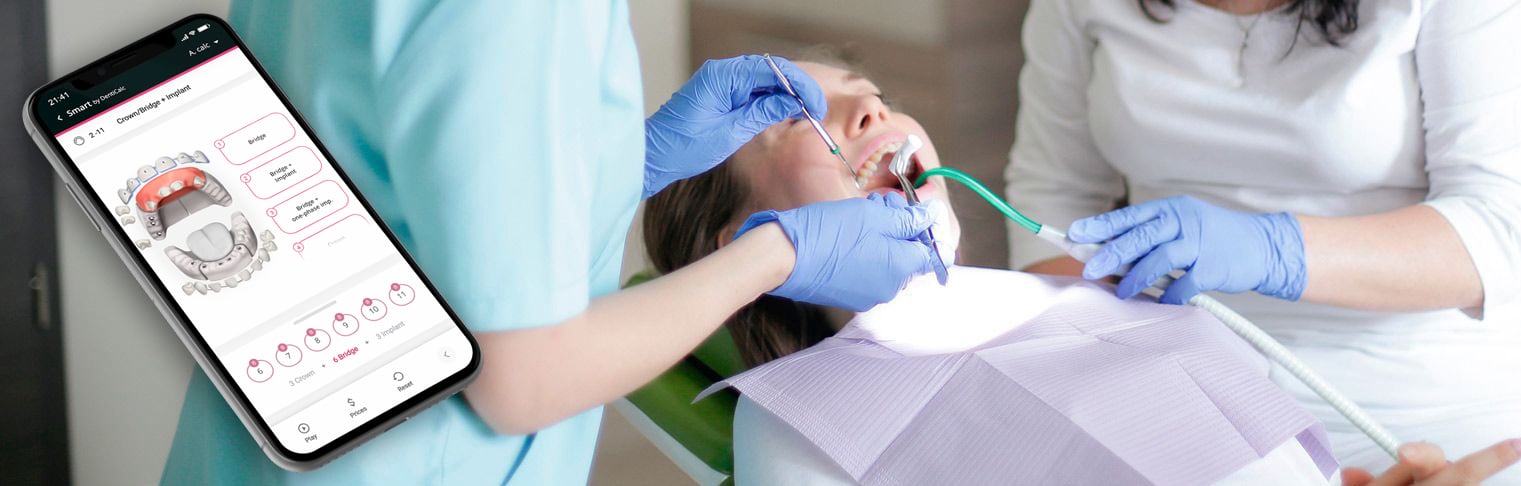
Traditional clinical management is no longer sufficient: patients who demand speed, autonomy, and seamless booking directly from their smartphones will not wait around... they simply choose another clinic.
As of writing (August 2025), dentistry in Spain is living a strange double life. On one hand, we witness extraordinary advances in clinical technology: high-precision 3D printers, CAD/CAM milling systems, cutting-edge intraoral scanners, and sophisticated robotic surgery suites. Yet when it comes to operational management and marketing, many clinics still operate with the exact same paper appointment ledger from twenty years ago, or at best a clunky Excel spreadsheet. The self-styled “modern” practices rely on disjointed third-party booking widgets that fail to synchronize with their daily schedule, let alone reinforce their brand identity. That is not an exaggeration.
A quick statistic brings this reality into sharp focus: according to the IDEO Institute, the digitalization score of dental clinics in Spain averages a dismal 3 out of 10. Yes, three. The real-world consequence? Prospective patients attempting to schedule or manage appointments from their mobile devices encounter an impenetrable wall; their search ends in frustration, and they book with a competitor simply because your front desk only answers the telephone during traditional office hours.
International Landscape vs. Spain
The United States stands as the global frontrunner in mobile technology adoption within the dental sector. Major dental healthcare networks and insurers—such as Delta Dental, Cigna, and Aetna—deploy dedicated mobile applications that enable doctor discovery, direct scheduling, and transparent benefits access. For instance, the “Brighter Schedule” application, engineered by Brighter and integrated by Delta Dental across its mobile ecosystem, allows seamless end-user booking. Furthermore, teledentistry, remote video consultations, and diagnostic AI tooling (such as automated pathology detection from dental radiographs) have become routine standards in advanced American practices.
In Europe, Germany and the United Kingdom stand out for their elevated “technology readiness”—namely, the institutional willingness of dental practitioners to adopt mobile software for appointment coordination, automated reminders, and real-time patient engagement. Notably, prestigious dental universities in the UK utilize specialized apps like LiftUpp for iPad-based clinical training, seamlessly merging educational data with operational benchmarks.
In South Korea, China, and across the Asia-Pacific region, rapid adoption of teledentistry platforms, oral health education apps (such as BrushDJ), smartphone-based self-examinations (e.g., OralCam), and preventative tele-monitoring is accelerating at an unprecedented pace. The regional focus centers heavily on mobile preventive care and proactive patient-provider communication.
Why Do These Countries Lead?
Above all, they benefit from mature digital infrastructure: high mobile health application penetration and digital literacy among healthcare professionals. They embrace innovative business models: teledentistry, direct-to-consumer clear aligner monitoring, and continuous digital care pathways. They deploy diagnostic AI tools that analyze oral photography and radiographs directly from mobile interfaces. And critically, they integrate digital health applications directly into university curricula and clinical residencies.
Meanwhile, What Is Happening in Spain?
A tiny minority of high-end private clinics in Madrid and Barcelona have deployed proprietary mobile applications. These platforms facilitate real-time online scheduling, access to clinical records, encrypted doctor-patient messaging, and direct communication with digital dental laboratories. Yet broad operational digitalization across patient acquisition, retention, and back-office management remains alarmingly primitive.
Only a small handful of organizations—predominantly large corporate networks or insurer-backed clinics such as Sanitas Dental—have developed internal mobile solutions. In fact, Sanitas recently increased its intraoral scanner deployment by 32% over the past year while scaling remote video consultations across its national footprint.
According to Everett Rogers' classic Diffusion of Innovations theory, the Spanish dental market currently lingers in the “late majority” or “laggards” phase. Innovators and early adopters—clinics operating unified mobile app ecosystems—represent less than 16% of the entire landscape.
Spain must advance. It must examine these international benchmarks: adopting mobile applications not as an optional marketing gadget, but as the foundational core of the patient experience. This requires unified scheduling, transparent communication, and continuous digital follow-up. Clinging to analog workflows guarantees a steady erosion of competitiveness, profitability, and patient loyalty in the immediate term.
The Overlooked Demographic Reality
Let us confront an argument that many clinic owners use to justify inaction: an aging population. Over 20% of Spanish citizens are currently over the age of 65, and within 30 years that figure will approach one-third of the nation. Skeptics claim this demographic is unfamiliar with mobile applications and digital platforms. Yet guess what? Their adult children and grandchildren are completely digital natives. It is the younger generation that researches clinical reputations, compares treatment alternatives, and books appointments on behalf of their parents and grandparents. Discarding digital transformation under the pretext that “my patient base is elderly” is the modern equivalent of relying on a fax machine simply because a few legacy vendors still operate one.
Operational Vulnerabilities in Practice Management
Beyond demographics, the most severe leakage occurs within daily operational management:
- Absence of real-time metrics: Many clinic directors have zero operational visibility: they cannot track cancellation rates, evaluate ad campaign attribution, or identify which marketing channels drive high-value surgical cases.
- Manual phone confirmations: Front-desk staff exhaust hours every day making repetitive outbound calls to confirm appointments. Imagine the astronomical labor waste involved.
- Leadership training deficit: Barely 10% of clinical directors have received structured executive education in digital healthcare management. Without leadership driving the change, modernization stalls.
- Cultural entrenchment: The pervasive mindset of “we have always done it this way”—a phrase that reliably asphyxiates innovation.
What a Dedicated Mobile App Actually Delivers
A well-architected mobile platform fundamentally transforms the practice. This is not speculative fantasy; it is backed by concrete operational outcomes:
- Surging Patient Acquisition: Clinics that synchronize organic SEO, targeted Google Ads campaigns, and friction-free mobile scheduling have documented website traffic increases of up to 170%. When prospective patients can secure a consultation in two taps from their phone, conversion rates surge dramatically.
- Dramatic Reduction in No-Shows: Automated push notifications and intelligent calendar synchronization slash missed appointments by 20% to 30%. For an active practice serving 5,000 patients annually, reclaiming hundreds of hours of unutilized chair time transforms the bottom line.
- Long-Term Patient Retention: Segmented email updates deliver value, but combining them with mobile push notifications, post-treatment care guides, and in-app loyalty programs deepens engagement. Elevating patient retention by just 10% yields tens of thousands of euros in additional annual net revenue.
- Operational Overhead Reduction: Eliminating paper charts, phone tags, and manual data transcription liberates administrative staff to focus on what matters most: delivering compassionate, exceptional in-person care.
A Concrete Financial Simulation
Consider an established dental practice managing an active roster of 5,000 patients per year. By implementing a modern digital infrastructure (such as a dedicated mobile application and automated intake), the practice can realistically achieve:
- A 30% to 50% expansion in new patient acquisition across key surgical and cosmetic categories.
- A 25% decrease in appointment cancellations and costly no-shows.
- A 25% increase in long-term patient lifetime retention through continuous automated hygiene and maintenance cycles.
The cumulative impact represents a six-figure surge in net practice revenue, with complete capital return on investment (ROI) realized in well under twelve months.
Immediate Strategic Next Steps
To capture this advantage before corporate conglomerates monopolize your local territory, take decisive action:
- Deploy integrated mobile platforms: Invest in digital solutions that unite booking, clinical communications, medical histories, and marketing touchpoints under your own distinctive brand.
- Educate management and clinical staff: Conduct internal training to transform clinic coordinators and office managers into empowered digital leaders.
- Demand rigorous ROI modeling: Partner with specialized healthcare marketing consultants who provide data-backed financial feasibility studies before writing a single line of code.
- Forge professional alliances: Collaborate with medical marketing specialists, regional dental associations, and official odontological colleges to ensure technical compliance and patient trust.
Final Executive Reflection
At the end of the day, the fundamental question is not whether your clinic will digitalize, but when. Because your patients already live on their mobile devices. If your clinic is not readily accessible in their pocket, to them, your practice simply does not exist. Digitalization is not an operational expense; it is a vital strategic investment that secures higher revenue, eliminates empty chair time, and cultivates lasting patient loyalty.
The choice is entirely yours: continue managing your schedule from an analog notebook... or place your clinic directly into the palm of your patients' hands.
Ready to modernize your clinic's patient acquisition and retention infrastructure? Connect with our advisory team through our contact portal for a bespoke digital audit tailored to your healthcare practice.

Jesús Lacera Cortiñas
Founder & Principal Consultant at SEO-Invoke. Specialist in Organic SEO, AEO/GEO Search Intelligence, AI Business Automation, and Digital Transformation Architectures for Healthcare and SME Brands.
Related Strategic Analyses
The Silent Frictions Stealing Your Enterprise Sales in 2026
How operational misalignment bleeds revenue and practical pathways to reconnect teams.
Traffic Without Sales: Why Your Customer Needs to See It in Action
How strategic video resolves decision anxiety and boosts high-ticket service conversions.